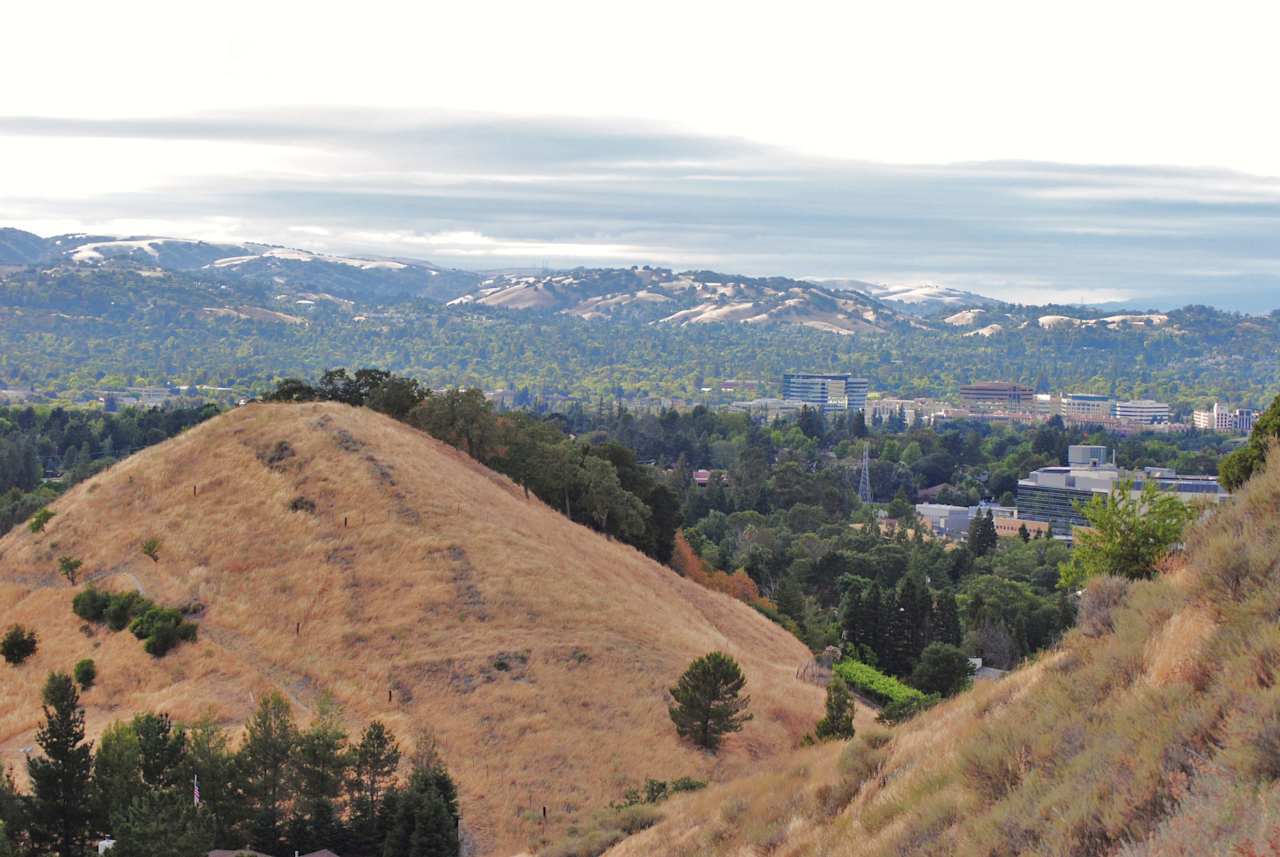
If you want East Bay access without committing to a dense urban setting, Pleasant Hill deserves a close look. Many buyers want a home base that balances commute options, everyday convenience, and housing choices that do not all look or price the same. This guide will help you understand where Pleasant Hill fits, what you can expect from the market, and how it compares with nearby options. Let’s dive in.
Why Pleasant Hill stands out
Pleasant Hill sits in Contra Costa County and had an estimated population of 34,017 as of July 1, 2025. Census data also shows a 62.6% owner-occupied housing rate, a median owner-occupied home value of $1,077,100, and a mean travel time to work of 30.2 minutes. Put together, those numbers point to a suburban market with strong owner occupancy and a commuter-friendly rhythm.
For many buyers, that makes Pleasant Hill feel like a practical middle ground. It is not trying to be a dense city center, but it also is not cut off from the rest of the East Bay. If your goal is a residential setting with access to transit, regional roads, and nearby amenities, Pleasant Hill checks many of the right boxes.
What homes look like here
Pleasant Hill offers more variety than many buyers expect. The city’s 2020 housing stock was 59.9% single-family detached, 10.9% single-family attached, 7.0% two-to-four-unit multifamily, 21.6% five-or-more-unit multifamily, and 0.6% mobile homes. That mix creates options for first-time buyers, move-up buyers, downsizers, and people looking for lower-maintenance living.
The city also allows ADUs and JADUs on both single-family and multifamily properties. That matters if you are thinking about multigenerational living, a separate work space, a guest setup, or a property with added flexibility over time. In a market where buyers often want a home to serve more than one purpose, that is a meaningful advantage.
Pleasant Hill home prices in context
Pleasant Hill is often described as a $1 million market, and that is directionally true. Zillow puts the city’s typical home value at $1,005,428, while its March 2026 median sale price was $905,833. Redfin reports a three-month median sale price of $924,523, with homes going pending in about 12 days.
That headline number only tells part of the story. Recent sales show a much wider range, from about $811,930 for a 3-bedroom, 1-bath home to $2,515,000 for a larger 4-bedroom, 3.5-bath property. Several recent sales also clustered between roughly $915,000 and $1.32 million, which supports the idea that Pleasant Hill offers entry-level detached homes, move-up options, and upper-tier properties rather than one narrow price band.
For buyers, this range matters because it creates more than one path into the market. For sellers, it means pricing strategy has to be highly specific to the home, condition, and location within the city. In a market like Pleasant Hill, broad averages are helpful, but accurate positioning still depends on the details.
What renting looks like
If you are still deciding whether to buy now or wait, the rental numbers are also useful. Zillow reports average rent in Pleasant Hill at $2,772, while Census data shows a median gross rent of $2,533. Those figures reinforce that Pleasant Hill carries a meaningful housing cost, but still sits below some neighboring East Bay markets.
For some households, renting in Pleasant Hill can be a way to test the location before buying. For others, comparing rent to purchase costs helps clarify whether long-term ownership fits their goals. Either way, the numbers point to a market with steady demand and broad appeal.
Commute options and transit access
One of Pleasant Hill’s strongest advantages is its role as a commuter base. The Pleasant Hill / Contra Costa Centre BART station, located at 1365 Treat Boulevard in Walnut Creek, sits on the Antioch to SFIA/Millbrae line. BART notes that buses, Highway 680, and the Iron Horse Trail converge there, and the station offers parking, bike racks, bike lockers, and a bike station.
The station is also served by County Connection, Wheels 70X Express Service to Dublin BART, and AC Transit 702 Early Bird Express. That gives you more than one way to connect into the broader region. If your work or regular routine takes you across Contra Costa County or toward larger Bay Area job centers, this is a meaningful part of the Pleasant Hill value proposition.
That said, Pleasant Hill is not a fully transit-first environment. Redfin rates the city 54 out of 100 for walkability, 28 for transit, and 61 for bikeability. In plain terms, you can benefit from BART and regional access, but many day-to-day errands will still be easier with a car once you move beyond the station area.
Daily life and local events
A home base is not only about commute math. It is also about whether the city gives you enough to enjoy your free time close to home. Pleasant Hill performs well here, especially for a suburban city.
The city’s official calendar includes a steady lineup of civic events and seasonal programming. Current examples include Sunset by the Lake Summer Concerts at City Hall from May 24 through August 30, 2026, the Pleasant Hill Night Market on the first and third Fridays of its season, the June 5, 2026 Juneteenth Celebration at Chilpancingo Park, the annual Art, Wine & Music Festival on May 16 to 17, 2026, Earth Day programming, and National Night Out.
That kind of schedule adds texture to everyday life. It gives residents recurring local touchpoints without requiring a major drive or a full day of planning. If you value a city that stays active and connected through public events, Pleasant Hill has more going on than some buyers assume.
Walnut Creek expands the amenity picture
Another reason Pleasant Hill works well as an East Bay base is what sits nearby. Walnut Creek adds a larger layer of dining, shopping, arts, and entertainment. For many Pleasant Hill residents, it functions as the closest bigger destination for going out, running errands, or building a more active social calendar.
Walnut Creek Downtown describes downtown as a place where dining, shopping, arts, and entertainment come together. Broadway Plaza identifies itself as an open-air upscale shopping center with more than 80 retailers and specialty shops. The downtown calendar also includes a year-round farmers market, Locust Street Festival, Walnut Creek Uncorked, and frequent shopping and food events.
This matters because Pleasant Hill does not have to do everything on its own to be a strong home base. Part of its appeal is that you can live in a more residential setting while staying close to a larger amenity center. For many buyers, that balance feels more sustainable than living directly in a busier core.
Pleasant Hill compared with nearby cities
If you are choosing between several East Bay communities, Pleasant Hill is often easiest to understand as a middle-ground option. Zillow’s typical home values place Pleasant Hill at $1,005,428, compared with Walnut Creek at $1,043,420, Concord at $742,769, and Lafayette at $1,956,403. Rental estimates show a similar pattern, with Pleasant Hill at $2,772, Walnut Creek at $2,871, Concord at $2,512, and Lafayette at $3,544.
Here is the practical takeaway. Pleasant Hill is not the lowest-cost choice in the area, but it is materially less expensive than Lafayette. It also often offers a more residential feel than downtown Walnut Creek while keeping easy access to Walnut Creek’s shopping, dining, and events.
If your top priority is the lowest price point, Concord may offer more room in the budget. If your priority is a premium market with significantly higher pricing, Lafayette sits at the other end of the spectrum. Pleasant Hill lands in between, which is exactly why it appeals to buyers who want balance rather than an extreme.
Who Pleasant Hill fits best
Pleasant Hill tends to make the most sense if you want a suburban home base with flexible housing options and reliable regional access. It can work well if you are relocating within the East Bay, moving from a denser area, or looking for a place that supports both commuting and quieter day-to-day living. The broad housing mix also gives you more options if your needs may change over time.
You may find Pleasant Hill especially appealing if you want:
- Detached homes to be a major part of your search
- Access to BART and Highway 680
- A residential setting with nearby event programming
- Easy reach to Walnut Creek amenities
- A market that sits between lower-cost and premium East Bay options
No city is right for everyone, and that is why local guidance matters. The best fit depends on your budget, commute pattern, property goals, and how you want your week to feel once you move in.
Final take on Pleasant Hill
Pleasant Hill reads as a smart, practical East Bay home base for buyers who want suburban living without losing regional connectivity. Its housing stock is led by detached homes but includes attached and multifamily options, its commute story is anchored by BART and Highway 680, and its local calendar adds more community activity than many buyers expect. When you add in its proximity to Walnut Creek, Pleasant Hill becomes easier to see for what it is: a balanced option with real everyday usability.
If you are weighing Pleasant Hill against Walnut Creek, Concord, or Lafayette, the smartest next step is to compare not just list prices, but value, location tradeoffs, and how each market fits your goals. For clear, data-backed guidance on Pleasant Hill and the broader Contra Costa market, connect with The Corio Group.
FAQs
Is Pleasant Hill, CA a good East Bay location for commuters?
- Yes. Pleasant Hill benefits from access to the Pleasant Hill / Contra Costa Centre BART station, Highway 680 connections, and additional bus services, making it a practical commuter base for many buyers.
What is the typical home price in Pleasant Hill, CA?
- Zillow places Pleasant Hill’s typical home value at $1,005,428, while recent median sale price data from Zillow and Redfin sits in roughly the low-to-mid $900,000s.
Does Pleasant Hill, CA have mostly single-family homes?
- Yes. The city’s 2020 housing stock was led by single-family detached homes at 59.9%, but it also includes attached homes and multifamily properties.
How does Pleasant Hill, CA compare with Walnut Creek and Concord?
- Pleasant Hill generally sits between the two on price. It is usually more expensive than Concord, a bit below Walnut Creek on typical home value, and often offers a more residential feel with close access to Walnut Creek amenities.
Are there local events in Pleasant Hill, CA?
- Yes. The city hosts recurring civic and seasonal events, including summer concerts, the Night Market, the Art, Wine & Music Festival, Juneteenth programming, Earth Day events, and National Night Out.
Is Pleasant Hill, CA a walkable city for daily errands?
- Pleasant Hill has a Redfin Walk Score of 54, which suggests some errands can be done on foot, but many day-to-day trips will still be easier by car depending on where you live.